

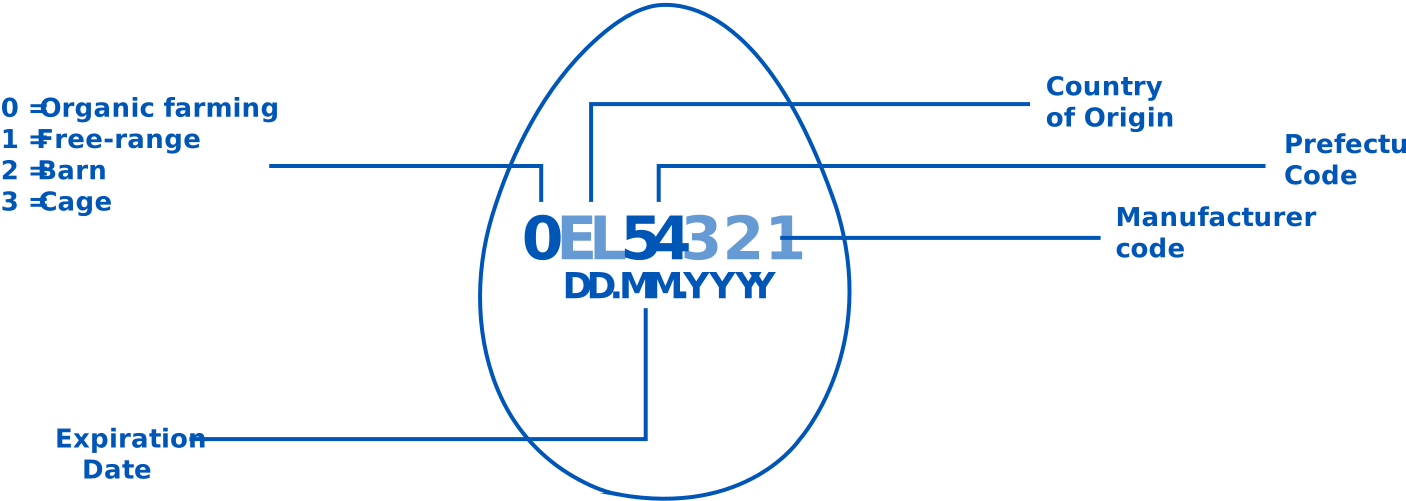
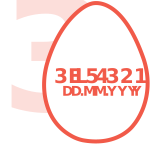
The code on the egg shell indicates the farming system. EU regulations make it mandatory that farming systems are written out in full on the packaging and the corresponding code number is stamped on the shell of each egg.
The first digit of the code corresponds to the production method:
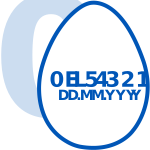
In organic poultry farming, egg-laying hens have access to an open area with natural vegetation for at least 8 hours/day and a minimum of one square metre of internal usable space per 6 hens.
During the day the hens have access to outside natural areas, natural light and have contact with soil. This allows them to engage in basic instinctive behaviors that are critical for their well-being, such as moving freely, spreading their wings, rolling in dirt to get rid of lice, foraging in search of worms and insects, all of which significantly improves the hens welfare as well as the nutritional value of eggs (increased fat, vitamin and mineral content).
Organically reared hens are fed with certified organic feed containing multiple grains. To be considered organic, the grains must be grown without the use of pesticides, herbicides or chemical fertilizers and, based on European Regulations, the preventive use of antibiotics and hormones widely used in other poultry farming systems is prohibited.
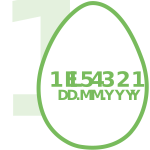
Hens have a minimum of one square metre of indoors usable space per 6 hens and can access an outdoors area with natural vegetation for at least 8 hours/day, where they are in natural light and have contact with the soil.
This allows them to express basic instinctive behaviors that are critical for their well-being, such as moving freely, digging the soil for worms and insects, rolling in the dirt to get rid of lice, which significantly improves their welfare as well as the nutritional value of the eggs (increased fat, vitamin and mineral content).
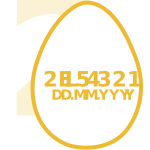
Barn eggs are produced in a housing system that allows laying hens to move freely within a shed.
They are therefore not confined to cages but they are kept permanently indoors, without any access to the outdoors and natural light. This system is far from ideal because rearing units are still very crowded (9 hens per square metre), which is stressful for the hens and increases aggression. However, they enjoy some freedom of movement, can spread their wings, move away from aggressive birds, they walk on straw rather than on wire mesh, can make nests and roost, all of which are improvements on cages. Due to the high stocking density, preventive antibiotics are used in the breeding units.
Cage eggs are produced by hens permanently confined in cages, either conventional* or ‘enriched’. This breeding system creates systemic suffering for hens by not allowing them to express any natural behaviour such as stretching their wings, moving around, scratching the soil, nesting or cleaning themselves by rolling in the dust. Hens in caged breeding never have access to outside space and natural light, they live in their own feces, stand on wire mesh which maim their feet, their bones breaking from lack of sun exposure and forced immobility. Fighting for living space, in constant stress, they attack and even cannibalize each other.
In addition, the crowded conditions in the cages favor the development and proliferation of dangerous pathogens. To prevent or suppress infections and parasitical infestations, antibiotics and insecticides are used extensively. Numerous studies show that residues of antibiotics can be found in eggs and egg products, enter the human food chain and contribute to bacterial resistance to antibiotics, one of the most serious public health concerns today.
International Health Bodies have highlighted that the indiscriminate use and consumption of antibiotics poses a serious public health risk, creating bacteria resistant to existing antibiotics. The concern is even greater because egg producers are known to use antibiotics classified by the World Health Organisation as ‘’Reserve Antibiotics”.
* Although conventional cages have been banned in the EU for reasons of welfare since 2012 (Directive 1999/74/EC), ‘enriched’ cages are still allowed which maintain the same basic welfare shortcomings. In Greece, inadequate enforcement and scarcity of controls has led to serious suspicions that conventional cages are still being used illegally.
European Food Safety Authority (EFSA), 2022. Antimicrobial resistance in zoonotic and indicator bacteria from humans, animals and food in the EU. EFSA Journal
World Health Organization (WHO), 2017. Stop using antibiotics in healthy animals to prevent the spread of antibiotic resistance.
Chen et al., 2019. Antibiotic residues in eggs: Human health risk and dietary exposure assessment. Science of the Total Environment, 650, 1269–1276.
I want to learn the news of the
Hellenic Animal Welfare Federation.